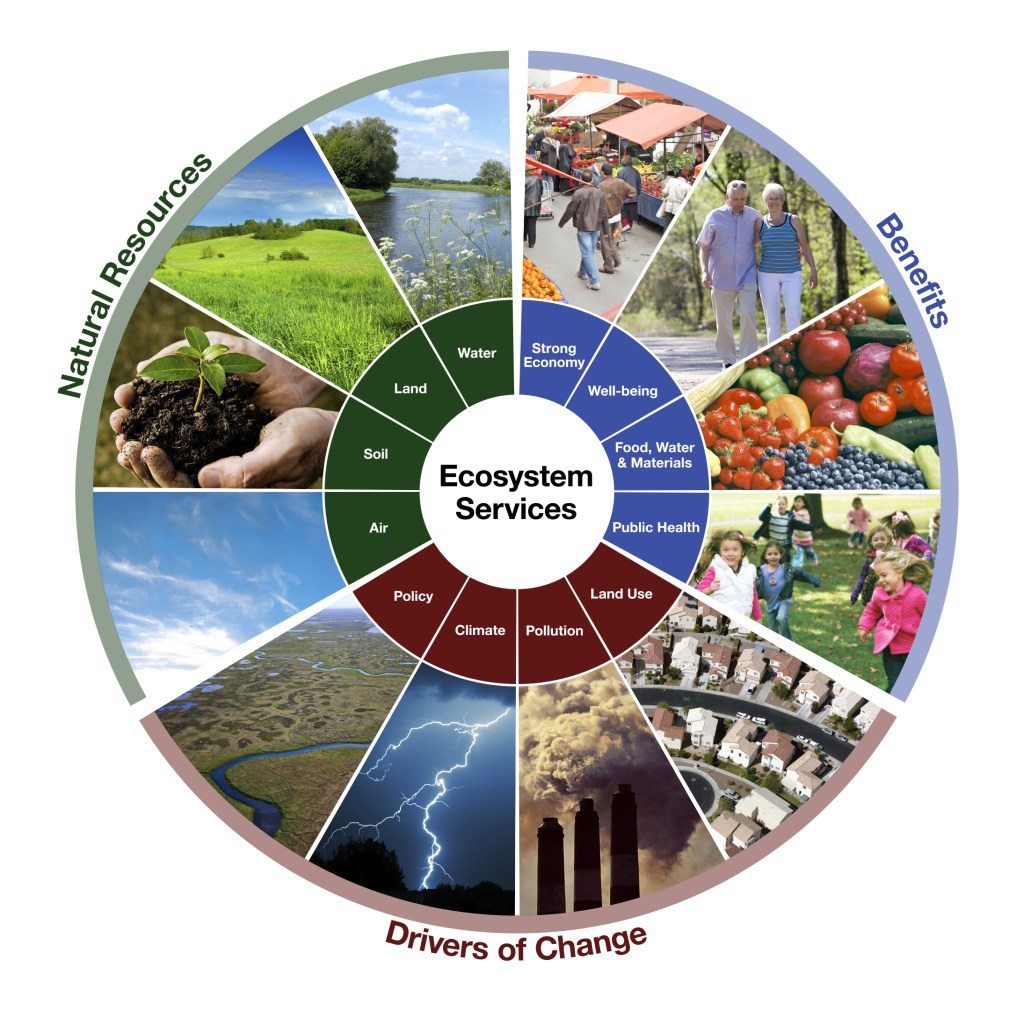
These include the purification of air and water, detoxification and decomposition of wastes, regulation of climate, regeneration of soil fertility, and production and maintenance of biodiversity, from which key ingredients of our agricultural, pharmaceutical, and industrial enterprises are derived.The Ecological Society of America (ESA), the nation’s leading professional society of ecological scientists, is an essential source of information for those addressing the many complex tasks associated with watershed management. An occasional publication series, Issues in Ecology, is an especially useful resource for citizens, resource managers, policymakers, and others designing and implementing watershed approaches to environmental management. Each Issues in Ecology paper is designed to report, in language understandable by non-scientists, the consensus of a panel of scientific experts on issues relevant to the environment. Issues in Ecology reports are available on theEcosystem goods and services produce the many life-sustaining benefits we receive from nature—clean air and water, fertile soil for crop production, pollination, and flood control. These ecosystem services are important to environmental and human health and well-being, yet they are limited and often taken for granted.Ecosystem-focused research develops methods that measure ecosystem goods and services and address the following:
How to estimate current production of ecosystem goods and services, given the type and condition of ecosystems.
How ecosystem services contribute to human health and well-being.
How the production and benefits of these ecosystem services may be reduced or sustained under various decision scenarios and in response to regional conditions.
Researchers are exploring and interpreting primary health data and social surveys, and are developing indicators for benefits associated with access to natural areas, such as improved health, reduced costs of healthcare, and improved social ties. Understanding research outcomes will lead to improved environmental management and planning that can inform urban design, strengthen neighborhoods, and contribute to community vitality, economic health, and livability.
 Site Title